OpenEvidence launches Coding Intelligence™ to help physicians capture every dollar they've earned
PR Newswire
MIAMI, March 26, 2026
MIAMI, March 26, 2026 /PRNewswire/ -- OpenEvidence, the most widely used medical AI and clinical decision-support platform among U.S. physicians, today announced the launch of Coding Intelligence™ to automate the coding process and capture missing reimbursement, allowing physicians to focus on their patients.

Modern medical billing has become impossibly complex and time-consuming. With tens of thousands of billing codes and multiple ways to code the same visit, the complexity of billing makes it challenging for physicians to get appropriately reimbursed without pivoting their focus away from patient care. We built Coding Intelligence™ to solve this.
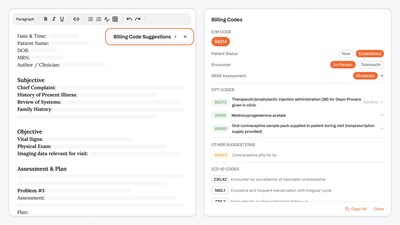
OpenEvidence Coding Intelligence™ is live today in Visits. It delivers automatic ICD-10 diagnoses, E/M level recommendations with supporting MDM rationale written directly into the note, and CPT code suggestions for faster, more accurate reimbursement, all derived from clinical documentation and based on the latest clinical guidelines. Coding Intelligence™ is applied automatically at the end of every visit and is available the moment a note is finished.
"Without any extra work, OpenEvidence is able to generate concise rationale for their CPT + E/M suggestions. It truly captures the complexity of the encounter and saves me hours when I'm at the ER," said Ania Bilski, MD, VP of Clinical AI at OpenEvidence.
OpenEvidence Coding Intelligence™ provides:
- E/M level recommendations with the full MDM rationale already written. Medical decision-making documentation is one of the most time-consuming parts of medical practice. For every hour of patient care, physicians spend nearly two additional hours on documentation. OpenEvidence generates the MDM breakdown automatically from the clinical note. Whether billing by complexity or by time, the reasoning is already documented and included in the record.
- Never guess CPT codes again. Suggestions are automatically surfaced based on what was done during the visit - including uncommon procedure codes that are easily missed for complex cases. The wrong code billed out of habit quietly compounds into significant lost revenue. Coding Intelligence™ ensures the right code gets submitted helping physicians avoid lost revenue and minimize time spent in paperwork.
- Automatic CPT code sequencing to maximize reimbursement. Under Medicare's Multiple Procedure Payment Reduction policy, every procedure after the first reimburses at roughly 50%. The order the codes are listed in determines how much the practice gets reimbursed. OpenEvidence shows expected RVU values alongside each CPT suggestion so codes can be sequenced correctly before the claim goes out - exactly the way an experienced biller would.
- ICD-10 diagnosis suggestions that reflect actual complexity of the encounter. ICD-10 diagnosis suggestions are surfaced automatically — no manual lookup, no searching for the most specific code at the end of a full clinic day. The suggestions reflect the actual nuance of what was documented.
"The true 'gold' is how the algorithm generates clear, concise, and RVU-billable Medical Decision Making (MDM) statements… [it] captures the complexity of the work already being done without forcing the physician to upcode." Kevin Lu, MD
Coding Intelligence™ is available today for all verified clinicians in OpenEvidence.
About OpenEvidence
OpenEvidence is the most widely used medical AI platform among U.S. physicians, and is trusted by hundreds of thousands of verified clinicians to make high-stakes clinical decisions at the point of care with answers that are sourced, cited, and grounded in peer-reviewed medical literature. OpenEvidence was founded with the mission to organize and expand the world's collective medical knowledge. Learn more at openevidence.com.
 View original content to download multimedia:https://www.prnewswire.com/news-releases/openevidence-launches-coding-intelligence-to-help-physicians-capture-every-dollar-theyve-earned-302726278.html
SOURCE OpenEvidence

