/C O R R E C T I O N - Yellowjacket/
PR Newswire
NEW YORK, Nov. 10, 2026
In the news release, 73 Iconic Brands Took the Consequential Brand™ Test. Only One Passed, issued 10-Nov-2026 by Yellowjacket over PR Newswire, we are advised by the company that changes have been made. The complete, corrected release follows, with additional details at the end:
73 Iconic Brands Took the Consequential Brand™ Test. Only One Passed
New research in Why Is This Book Yellow? reveals why household-name brands can fall short of younger challengers—and why recognition alone may not be enough in the AI recommendation economy.
NEW YORK, Nov. 10, 2026 /PRNewswire/ -- Some of the world's most recognizable brands have a problem: people know them, but that doesn't necessarily mean they would recommend them, defend them or miss them if they disappeared. That matters now that human momentum drives brand success, and AI recommendations feed on it.
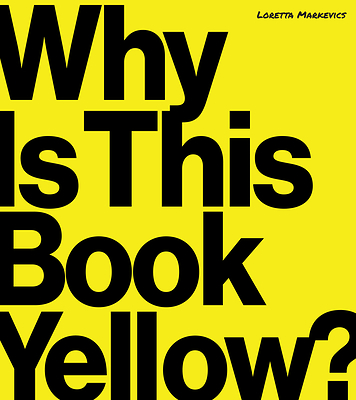
New research featured in Why Is This Book Yellow? (YellowJacket Press, available November 10, 2026), a new book by advertising and PR agency veteran, marketing futurist and entrepreneur Loretta Markevics, challenges one of marketing's most enduring assumptions: that becoming iconic is the ultimate measure of brand success.
After examining 73 of today's hottest startups and most iconic brands, Markevics found that:
- Among consumers familiar with the brands studied, just one, Amazon, met all three criteria for a Consequential Brand™: a brand consumers bring up unprompted, stand behind when challenged and would genuinely miss if it disappeared.
- The results changed dramatically when researchers looked exclusively at each brand's own customers: 28 of the 73 brands met all three criteria. These 28 include established names such as Amazon, Apple and Chick-fil-A, alongside newer challengers like Chime, Vuori, AG1, Skims, Rhode, Quince, Cava and Canva. Several household names surprisingly fell short of the study's thresholds: Coca-Cola and Google would be missed and defended, but people say they don't bring them up unprompted; Nike met the threshold for defensibility but fell short of talkability and defensibility; and Starbucks, Target and Microsoft did not meet the study's qualification thresholds of any of the three dimensions.
The findings reveal a striking divide between established brands and newer challengers. Among their own users, more than half of the brands that qualified as consequential (54%) were founded in 2010 or later, compared with 29% of brands that didn't.
The commercial implications are significant. Customers of brands classified as consequential reported substantially stronger loyalty and willingness to pay a premium. Among customers of consequential brands, 43% said they would stay loyal even if a competitor offered equal or better quality, compared with just 27% of customers of other brands. And 41% said they would pay more for their preferred brand over a comparable alternative, versus 24% of customers of other brands.
And the stakes are rising as AI reshapes how consumers discover and choose brands. Nearly three in ten consumers (29.6%) surveyed had asked an AI tool for a brand recommendation in the previous three months, while 50.7% viewed an AI recommendation as a signal of popularity. Meanwhile, 73.8% said they default to price or convenience when brands seem interchangeable.
Beyond identifying which brands are falling short, the book introduces a practical framework for marketers navigating a new era of AI-driven discovery and recommendation. The Consequential Brand™ framework gives companies a way to assess brand strength beyond traditional measures of awareness and recognition, pinpoint where consumer relationships are breaking down, and identify opportunities to become brands people actively talk about, defend and would miss.
"Most brands are still playing for attention in an economy that runs on recommendation," said Markevics. "This holiday season, more people will let AI help build their shopping lists, and eventually, AI agents will do much of the buying for them. AI doesn't operate in a vacuum. It draws from what people say about brands, recommend and trust. Our research shows that even iconic brands struggle to generate that kind of human momentum. The ones that do have a better chance of making the list. Being consequential isn't a nice-to-have anymore. It's how you get chosen in the AI age."
From Brand Awareness to Brand Consequence
Why Is This Book Yellow? goes beyond diagnosing the problem to offer marketers a roadmap for building consequential brands. Along with the Consequential Brand Triangle, it also explores a method for breaking the conventions that make brands within a category look and sound alike; eight brand segments that help marketers identify where they stand; and roadmaps for strengthening the behaviors that make brands consequential.
Marketers can assess their own brands through the free 12-question Consequential Brand Evaluator, which delivers an individualized assessment and report.
Even the book's design puts its central thesis into practice. In a category dominated by conventional business book covers, Why Is This Book Yellow? arrives in bright yellow with a question on its cover, designed to stand out, spark curiosity and challenge expectations.
Introducing Yellowjacket: The Consequential Brand™Consultancy
To help brands compete in this challenging context, Markevics is launching Yellowjacket, a strategic consultancy designed to help brands move from being recognized to becoming consequential.
Built on the book's framework and proprietary research, Yellowjacket helps companies diagnose where their brands stand, identify the category conventions holding them back and develop strategies that strengthen consumer connection and relevance.
Its capabilities span strategy, research, creative and content, and AI visibility (GEO, entity mapping and content planning). Offerings range from the free Consequential Brand Evaluator and competitive Consequence Gap analysis to comprehensive brand strategy and targeted initiatives designed to strengthen talkability, defensibility and indispensability.
"The book shows you what consequential looks like. Yellowjacket gets you there," said Markevics. "We find the rule your category needs broken, prove it with data, then build the strategy, content and AI visibility that get a brand talked about, defended and missed."
About the Research
The findings are based on two national surveys of 1,000 U.S. consumers each, an assessment of 73 of today's hottest and most iconic brands, and more than 25 interviews with CMOs, CEOs, founders and senior agency leaders. Wave I (June 2026) identified the behaviors that signal a brand has become consequential and explored how AI is changing brand discovery. Wave II (August 2026) rated each of the 73 brands, across 14 categories, on all three behaviors. Brands were scored both among all consumers aware of them and among their own users.
The Consequential Brand framework and its qualification thresholds were developed through analysis of the research findings. The resulting classifications reflect consumer responses within the study's sample and the framework's defined criteria.
Availability
Why Is This Book Yellow? (YellowJacket Press) is available beginning November 10, 2026. The signature 8 × 9-inch hardcover edition ($49.99; ISBN 979-8-9971257-1-4) is available at whyisthisbookyellow.com. The ebook ($12.99; ISBN 979-8-9971257-0-7) is available through Amazon Kindle.
Review copies, additional research findings and interviews with Markevics are available upon request.
About Loretta Markevics
Loretta Markevics is the founder and CEO of Yellowjacket, a marketing futurist, entrepreneur, author and creator of the Consequential Brand™ framework. A former Chief Strategy & Creative Officer and EVP with more than 25 years in advertising and PR, she is the founder of three companies, including Yellowjacket. She has led global strategy for brands and companies including HP, McDonald's, Procter & Gamble, Diageo, Pfizer, Novartis, and InterContinental Hotels Group at agencies including McCann, Grey, Porter Novelli and DeVries Global, and was among the early strategists to integrate advertising and public relations. Her work has earned Cannes Lions, Effie, SABRE, PRWeek and PRSA honors and a 4A's Jay Chiat Award. She has been named one of Entrepreneur magazine's Top 10 Inspiring Women Entrepreneurs to Watch, won a Stevie Award for Best Female Entrepreneur, been honored as a Trailblazer in Ragan and PR Daily's Top Women in Communications, and named to PRWeek's 40 Under 40. She is also the Founder and CEO of Sēd and The Farmers Finds. She is based in New York. lorettamarkevics.com, TikTok @lorettamarkevics
About Yellowjacket
Yellowjacket is an independent strategic marketing consultancy helping brands become consequential through research, strategy, content optimization and improving AI visibility. Built on the Consequential Brand™ framework, Yellowjacket helps companies understand whether consumers would talk about, defend and miss their brand—and develop the strategies to strengthen those connections.
Correction: The second bullet and the "About the Research" paragraph have been updated to modify the description of the study and research.
 View original content to download multimedia:https://www.prnewswire.com/news-releases/73-iconic-brands-took-the-consequential-brand-test-only-one-passed-302935175.html
SOURCE Yellowjacket

